- 26597 East River Road Splendora, Tx. 77372 | Mon-Fri 5:30am-8:00pm |
- thesandbox.childcare2023@gmail.com

Child Developmental Milestones by Age: What Parents Need to Know From Birth to 5 Years

Best Parks and Outdoor Activities in Splendora, TX with Kids
May 26, 2026
Screen Time Guidelines and Reading Schedules for Children by Age: What Parents Need to Know
June 9, 2026As parents and caregivers, one of our most important roles is nurturing and supporting your child’s growth and development. Understanding what developmental milestones to expect at different ages helps you celebrate your child’s progress and recognize when additional support might be helpful.
Developmental milestones are skills and behaviors that most children can do by a certain age. These include physical abilities (like crawling and walking), communication skills (like babbling and speaking), and social-emotional development (like smiling and playing with others). However, it is important to remember that every child develops at their own pace.
At The Sandbox Learning Center, we track developmental progress carefully and partner with parents to ensure every child is thriving. This guide outlines key milestones by age so you know what to expect.
BIRTH TO 3 MONTHS
Physical Development (Gross Motor Skills)
By 3 months, your baby should be:
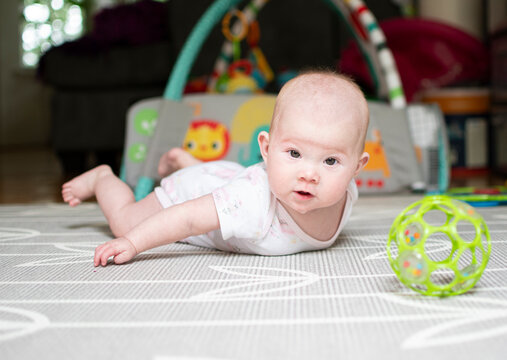
- Lifting their head slightly when on their tummy
- Pushing chest up with arms when lying on belly
- Opening and closing hands in response to stimulation
- Moving eyes to follow objects and familiar faces
Fine Motor Skills
By 3 months, look for:
- Hands beginning to open (less clenched from newborn reflex)
- Bringing hands to mouth for exploration and self-soothing
- Grasping objects that are placed in their hand
- Reaching toward toys and bright objects
Communication and Language
Your baby at 3 months should:
- Make cooing sounds (oooh and aaah)
- Respond to sudden loud sounds with startle or alertness
- Turn head toward your voice and familiar sounds
- Make different cries for different needs (hungry vs. tired)
Social and Emotional
By 3 months, your baby will:
- Smile at faces, especially familiar people
- Begin to follow faces with their eyes during interaction
- Show some social response to caregiver interaction
- Recognize familiar voices, particularly the mother’s voice
4 TO 6 MONTHS
Physical Development
By 6 months, your child should be:
- Rolling from front to back (or vice versa)
- Sitting with minimal support from caregiver
- Supporting weight on legs when held upright
- Rocking back and forth in preparation for crawling
Fine Motor Skills
Expect by 6 months:
- Reaching for and grasping objects intentionally
- Transferring objects from one hand to the other
- Shaking toys to create sounds and effects
- Bringing objects to mouth for exploration
Communication
By 6 months, your child should:
- Babble (repeating sounds like ma-ma and da-da)
- Respond to their name being called
- Make sounds to show joy and frustration
- Begin to understand ‘no’ (though may not comply)
Social and Emotional
By 6 months, look for:
- Recognizing familiar faces and showing preference
- Smiling back at caregiver in response to interaction
- Showing excitement when seeing familiar people
- Expressing fear of strangers or unfamiliar situations
7 TO 12 MONTHS
Physical Development
By 12 months, your child should be:
- Sitting independently without support for brief periods
- Crawling or scooting (crawling styles vary widely)
- Standing with support or pulling up on furniture
- Attempting to take steps while holding on to objects
Fine Motor Skills
By 12 months, expect:
- Picking up small objects with thumb and finger (pincer grasp)
- Opening containers with help or manipulation
- Exploring objects in different ways (shaking, banging, throwing)
- Turning pages in a board book (though clumsily)
Communication
By 12 months, your child should:
- Say 1-2 recognizable words (mama, dada)
- Understand simple words and gestures
- Respond to their name consistently
- Point to objects and people they want to communicate about
Social and Emotional
By 12 months, your child will:
- Play simple games like peek-a-boo with engagement
- Show affection for familiar people through hugging
- Show fear of strangers or wariness of unfamiliar adults
- Understand object permanence (knowing objects still exist when hidden)
13 TO 18 MONTHS
Physical Development
By 18 months, your child should be:
- Walking independently (may be unsteady or wobbly)
- Running (though may fall frequently due to coordination)
- Climbing stairs with assistance from adult
- Kicking a ball when rolled toward them
Fine Motor Skills
By 18 months, expect:
- Stacking 2-3 blocks on top of each other
- Scribbling intentionally with crayon or marker
- Holding a spoon (with help and spilling)
- Turning pages in a board book with more control
Communication
By 18 months, your child should:
- Say 10-20 words recognizably
- Follow simple instructions (Get your shoe)
- Point to objects when named by adult
- Make animal sounds (moo, baa)
Social and Emotional
By 18 months, your child will:
- Show independence (saying me do or attempting tasks)
- Show affection for familiar people
- Show ownership (that’s mine)
- Begin pretend play with toys
19 TO 24 MONTHS
Physical Development
By 24 months, your child should be:
- Walking and running (though still wobbly gait)
- Kicking and throwing a ball
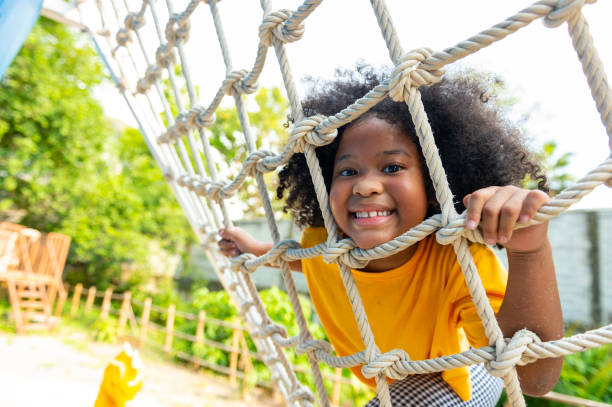
- Climbing on furniture and playground equipment
- Beginning to jump with both feet
Communication
By 24 months, your child should:
- Speak 50+ recognizable words
- Use 2-word phrases (more milk, mommy up)
- Identify familiar people and objects when named
- Answer simple yes or no questions
2 TO 5 YEARS: KEY DEVELOPMENTAL PERIODS
Between ages 2 and 5, children experience rapid development across all domains. They transition from toddlers into preschoolers, developing increasing independence, social skills, and cognitive abilities. By age 3, they become more cooperative and understand simple rules. By age 4, they demonstrate imagination and complex play. By age 5, they show readiness for kindergarten with advanced communication, physical coordination, and social-emotional skills.
WHAT IF YOUR CHILD ISN’T MEETING MILESTONES?
Remember: All Children Develop at Different Rates
Some important points:
- Children can develop in different orders and sequences
- Skipping a single milestone is not always concerning
- Cultural and family variations in development exist
- Premature children reach milestones by adjusted age initially
When to Contact Your Pediatrician
Discuss concerns with your doctor if your child:
- Isn’t reaching several milestones for their age range
- Lost skills they previously had (regression)
- Shows significant delay in one area like language
- You have concerns despite reassurance
Your pediatrician can refer you to specialists and early intervention programs if needed. Early identification and support make a significant difference.
THE ROLE OF ROUTINE AND CONSISTENCY IN DEVELOPMENT
Developmental milestones are more likely to be reached when:
- Children have predictable daily routines they can rely on
- Both home and childcare settings support similar developmental goals
- Multiple caregivers communicate regularly about child progress
- Children feel emotionally secure and supported
Consistency between home and childcare environments is particularly important for milestone achievement.
ACTIVITIES THAT SUPPORT DEVELOPMENTAL MILESTONES
For All Ages
The best support for development across all ages includes:
- Responsive, loving interactions with caregivers
- Varied sensory experiences and exploration opportunities
- Age-appropriate play activities and toys
- Reading books together regularly
- Outdoor time and physical activity
- Consistent routines and predictable patterns
CONCLUSION
Understanding developmental milestones helps you appreciate your child’s growth and recognize when support might be beneficial. Remember that each child develops uniquely and at their own pace. The milestones outlined in this guide represent typical ranges, not rigid deadlines.
At The Sandbox Learning Center, we celebrate every child’s individual journey while providing environments and activities that support healthy development across all domains. If you have questions about your child’s development, we are always available to discuss and share observations from our classroom.
Our team is trained to recognize developmental milestones and to celebrate when children achieve new skills. We partner with families to ensure consistency between home and center, supporting your child’s growth across all areas.